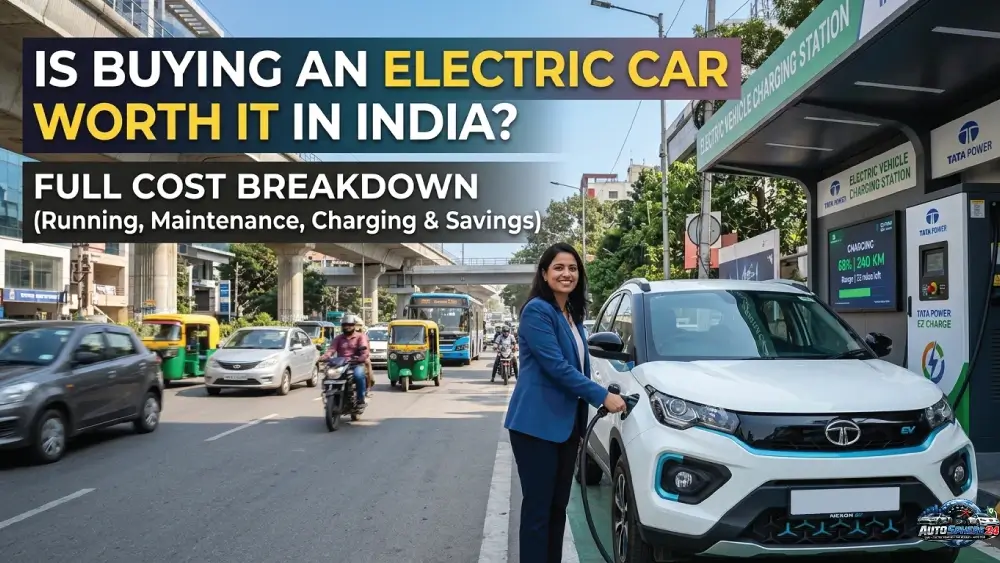
Electric vehicles (EVs) are no longer just a futuristic concept-they are rapidly becoming a mainstream choice in India. With rising fuel prices, increasing environmental awareness, and government incentives, many car buyers are asking one important question:
Is buying an electric car actually worth it in India?
In this detailed guide by Auto Sphere 24, we break down every cost associated with EV ownership-so you can make a smart and informed decision.
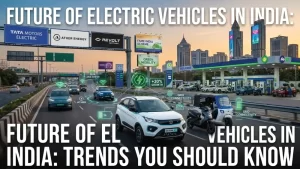
Why Electric Cars Are Trending in India
India has seen a massive rise in EV adoption over the last few years. Cities are expanding charging infrastructure, and car manufacturers are launching new electric models across budgets.
Recent trends show:
- EV sales are increasing rapidly due to fuel price volatility
- Charging infrastructure is expanding in urban and semi-urban areas
- Government policies are actively supporting EV adoption
Simply put, EVs are becoming more accessible and practical than ever before.
Upfront Cost: EV vs Petrol Cars
Let’s address the biggest concern first-purchase price.
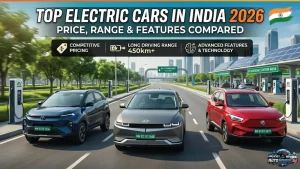
Electric cars in India typically cost ₹1–3 lakh more than their petrol counterparts in the same segment.
Example:
- Petrol hatchback: ₹6–8 lakh
- Electric version: ₹8–11 lakh
Why EVs Cost More:
- Expensive lithium-ion battery packs
- Limited large-scale manufacturing
- Advanced technology
However, this price gap is gradually shrinking as EV production increases.
Running Cost Breakdown (Per Km Comparison)
This is where EVs truly shine.
Petrol Car Running Cost:
- ₹6–₹8 per km (based on ₹100+/litre fuel price)
Electric Car Running Cost:
- ₹1–₹2 per km (home charging)
Real Savings:
- Savings of ₹5–₹6 per km
- Annual savings can exceed ₹1 lakh for regular drivers
Example Calculation:
If you drive 1,500 km/month:
- Petrol: ₹10,500/month
- EV: ₹2,000/month
- Savings: ₹8,500/month
That’s where EVs start paying off.
Charging Costs Explained
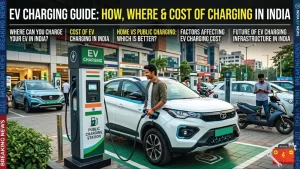
Charging an EV is simple-but cost depends on how and where you charge.
Home Charging (Most Affordable):
- ₹6–₹10 per unit
- ₹1–₹1.5 per km
Public Fast Charging:
- ₹15–₹25 per unit
- Slightly higher cost but faster charging
Full Charge Cost:
- ₹250–₹500 per full charge
Key Insight:
If you rely mostly on home charging, EV ownership becomes extremely cost-effective.
Maintenance & Service Costs
Electric cars have fewer moving parts, which directly reduces maintenance costs.
Petrol Car Maintenance:
- ₹10,000–₹15,000/year
EV Maintenance:
- ₹4,000–₹6,000/year
Why EV Maintenance is Cheaper:
- No engine oil
- No clutch or gearbox complexity
- Less brake wear (regenerative braking)
Over time, this adds significant savings.
Government Subsidies & Tax Benefits
The Indian government is actively promoting EV adoption through schemes like:
- FAME II subsidy
- State-level incentives
- Road tax exemptions
- Lower GST (5% vs 28% for petrol cars)
These incentives can reduce the effective price of an EV by ₹50,000 to ₹1.5 lakh, depending on the state.
Battery Cost & Replacement Reality
The battery is the most expensive component of an EV.
Key Facts:
- Battery life: 6–10 years
- Replacement cost: ₹3–₹6 lakh (depends on model)
However:
- Most manufacturers offer 8-year warranties
- Battery prices are gradually decreasing
For most users, battery replacement won’t be needed during early ownership.
Total Cost of Ownership (5-Year Comparison)
Let’s break it down clearly:
Petrol Car (5 Years):
- Fuel: ₹4–5 lakh
- Maintenance: ₹50,000+
- Total: ₹5–6 lakh
Electric Car (5 Years):
- Charging: ₹1–1.5 lakh
- Maintenance: ₹20,000–₹30,000
- Total: ₹1.5–2 lakh
Savings: ₹3–4 lakh over 5 years
This is why EVs are considered a long-term investment.
Pros & Cons of Electric Cars in India
Pros:
- Extremely low running cost
- Eco-friendly (zero tailpipe emissions)
- Smooth and silent driving
- Lower maintenance
Cons:
- Higher upfront cost
- Charging infrastructure still developing
- Range anxiety for long trips
- Resale market still evolving
Who Should Buy an EV in India?
Electric cars are ideal if:
- You drive daily (20–50 km)
- You have access to home charging
- You want long-term savings
- You mainly drive in cities
EVs may not be ideal if:
- You frequently travel long distances
- You don’t have easy charging access
Is It Worth It?
Yes-buying an electric car in India is worth it, but only for the right user.
If your usage is city-based and consistent, EVs offer:
- Massive savings
- Lower maintenance
- Future-ready technology
However, if you are an occasional driver or highway-focused user, the benefits may not justify the higher upfront cost-yet.
As highlighted by Auto Sphere 24, the EV revolution is still evolving. With better batteries, lower prices, and improved infrastructure, electric cars are expected to dominate the Indian market in the coming years.
Conclusion
Electric vehicles are not just a trend-they are the future of mobility in India. While the initial investment may seem high, the long-term savings and environmental benefits make EVs a smart choice for many buyers.
As EV technology continues to evolve, the question is no longer if you should switch-but when.
FAQs
Are electric cars cheaper than petrol cars in India?
Yes, EVs are cheaper in the long run due to significantly lower running and maintenance costs.
What is the cost per km for an electric car in India?
Typically ₹1–₹2 per km, compared to ₹6–₹8 per km for petrol cars.
How much does it cost to fully charge an EV?
Around ₹250–₹500 depending on battery size and electricity rates.
How long do EV batteries last?
Most EV batteries last 6–10 years and come with 8-year warranties.
Is charging infrastructure available in India?
Yes, and it is rapidly expanding across cities and highways.
Should I buy an EV in 2026?
If you drive regularly in cities and have home charging access, 2026 is a great time to switch.