The monsoon season brings much-needed relief from the scorching heat, but it also creates challenging conditions for car owners. Heavy rainfall, waterlogged roads, mud, and humidity can negatively impact your vehicle’s performance and longevity. Without proper care, your car may suffer from issues like rust, engine damage, electrical failures, and reduced visibility. In this detailed guide by Auto Sphere 24, we’ll walk you through essential monsoon car care tips to keep your vehicle safe, efficient, and reliable during the rainy season.
Why Monsoon Car Care is Important
Rainwater, combined with dirt and pollutants, can damage your car’s exterior and internal components. Water seepage can affect electrical systems, while slippery roads increase the risk of accidents.
Proper monsoon maintenance helps you:
- Prevent rust and corrosion
- Improve road safety
- Avoid unexpected breakdowns
- Maintain engine efficiency
- Extend vehicle lifespan
Ignoring these factors can lead to costly repairs and unsafe driving conditions.
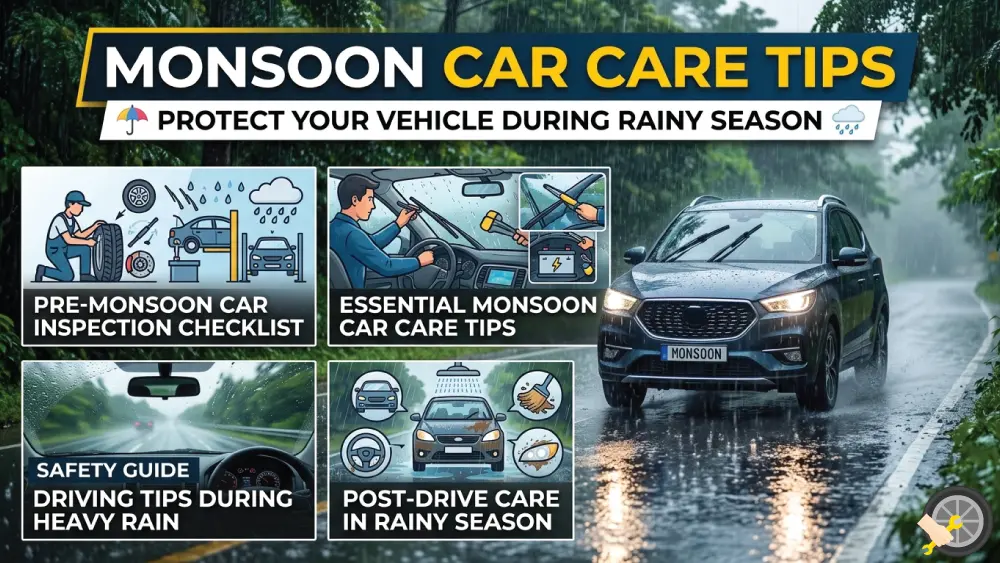
Pre-Monsoon Car Inspection Checklist
Before the rainy season begins, a thorough inspection is crucial. Here’s what you should check:
1. Tyres Condition
- Ensure adequate tread depth for better grip
- Check tyre pressure regularly
- Replace worn-out tyres immediately
2. Brakes Performance
- Test braking response
- Listen for unusual noises
- Replace brake pads if necessary
3. Battery Health
- Inspect battery terminals for corrosion
- Ensure proper charge level
- Replace old batteries
4. Wipers and Washer System
- Replace worn-out wiper blades
- Use high-quality windshield washer fluid
5. Lights and Indicators
- Check headlights, fog lamps, and indicators
- Ensure proper visibility during heavy rain
Essential Monsoon Car Care Tips
1. Protect Your Car’s Exterior
Rainwater often contains acids and pollutants that damage paint.
- Wash your car regularly to remove dirt and mud
- Apply wax polish for an added protective layer
- Avoid parking under trees to prevent stains and debris
2. Prevent Rust and Corrosion
Moisture is the biggest enemy during monsoon.
- Apply anti-rust coating on underbody
- Clean mud deposits from wheel arches
- Dry your car after exposure to water
3. Maintain Clear Visibility
Driving in rain requires maximum visibility.
- Replace old wipers immediately
- Clean windshield regularly
- Use anti-fog solutions for windows
4. Check Electrical Components
Water can damage your car’s electronics.
- Inspect wiring and fuses
- Ensure all lights are functioning properly
- Avoid water entering the engine bay
5. Keep Interiors Dry
Humidity can lead to foul smells and mold.
- Use floor mats to prevent water accumulation
- Keep silica gel or moisture absorbers inside
- Dry seats and carpets if they get wet
6. Monitor Engine Health
Water entering the engine can cause severe damage.
- Avoid driving through deep water
- Check air filter condition
- Ensure proper sealing of engine components
7. Lubricate Moving Parts
Rainwater can wash away lubrication.
- Lubricate door hinges and locks
- Check suspension components
- Apply grease where needed
Driving Tips During Heavy Rain
Driving safely is just as important as maintaining your car.
1. Drive Slow and Steady
- Reduce speed on wet roads
- Avoid sudden acceleration and braking
2. Maintain Safe Distance
- Keep extra distance from vehicles ahead
- Wet roads increase stopping distance
3. Avoid Waterlogged Roads
- Deep water can damage engine and electricals
- If unavoidable, drive slowly in low gear
4. Use Headlights Wisely
- Turn on headlights during heavy rain
- Avoid high beams in foggy conditions
5. Stay Alert for Hydroplaning
- Keep steering steady
- Do not panic brake
Post-Drive Care in Rainy Season
After driving in rain, follow these steps:
- Wash off mud and dirt immediately
- Dry brakes by gently applying them while driving slowly
- Check underbody for debris
- Clean and dry interiors
Regular post-drive care prevents long-term damage and keeps your car in top condition.
Common Monsoon Car Problems & Solutions
1. Engine Stalling
Cause: Water entering engine
Solution: Avoid restarting immediately; seek professional help
2. Brake Failure
Cause: Wet brake components
Solution: Drive slowly and apply brakes intermittently to dry them
3. Foggy Windows
Cause: Humidity difference
Solution: Use defogger or AC
4. Electrical Malfunctions
Cause: Water seepage
Solution: Regular inspection and waterproofing
Ever-Evolving Auto Tips for Rainy Season
The automotive world is constantly evolving, and modern solutions can make monsoon driving easier and safer:
- Advanced Tyres: New-generation tyres offer superior wet grip
- Water-Resistant Coatings: Ceramic coatings protect car paint better
- Smart Sensors: Modern cars alert drivers about slippery conditions
- Dash Cameras: Useful for safety and insurance claims
- Portable Air Compressors: Maintain tyre pressure anytime
As highlighted by Auto Sphere 24, staying updated with the latest auto innovations can significantly improve your driving experience during monsoons.
Pro Tips for Extra Protection
- Keep an emergency kit (torch, first-aid, tools)
- Carry a waterproof car cover
- Always have a fully charged phone
- Keep fuel tank at least half full
- Store important documents in waterproof folders
Conclusion
Monsoon season doesn’t have to be stressful for car owners. With proper maintenance, careful driving, and regular inspections, you can protect your vehicle from rain-related damage and ensure a smooth driving experience. By following these monsoon car care tips, you not only enhance your car’s performance but also ensure your safety on the road. A little extra care goes a long way in preventing major issues.
FAQs
How often should I wash my car during monsoon?
You should wash your car at least once a week to remove dirt, mud, and acidic rainwater deposits.
Is it safe to drive through waterlogged roads?
It’s best to avoid them. If unavoidable, drive slowly in low gear and maintain steady acceleration.
Why do my car windows fog up during rain?
Fogging occurs due to temperature differences inside and outside the car. Use AC or defogger to clear it.
Can rain damage my car’s engine?
Yes, if water enters the engine, it can cause severe damage like hydrostatic lock.
What should I do if my car stalls in water?
Do not restart the engine. Call for roadside assistance immediately.
Are anti-rust coatings necessary?
Yes, they provide essential protection against corrosion caused by moisture and mud.