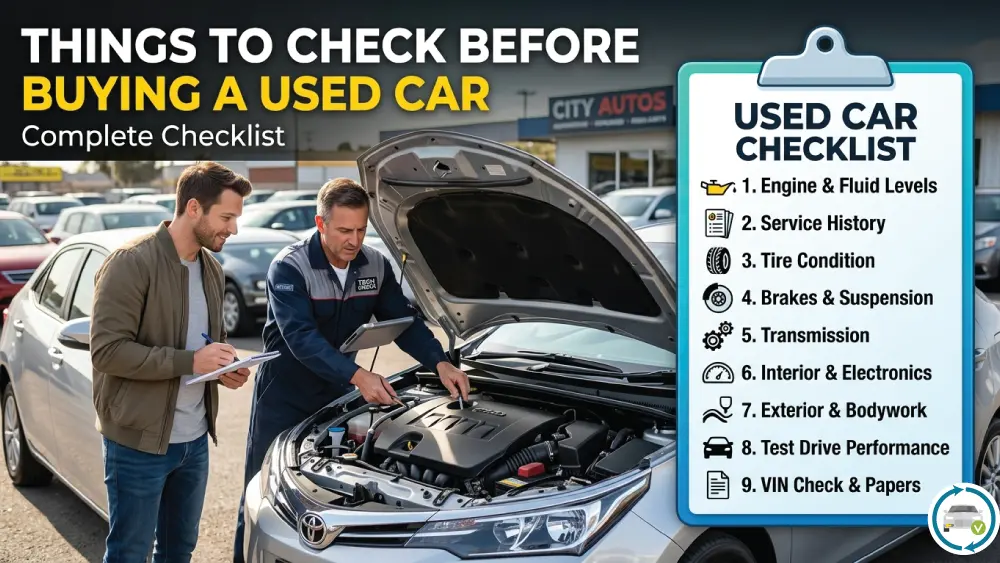
Buying a used car can be one of the smartest financial decisions you make-if done right. With rising vehicle prices and a growing pre-owned car market in India, more buyers are choosing used cars as a practical alternative. However, a poor inspection or rushed decision can turn your dream deal into a costly mistake.
This comprehensive guide will walk you through everything you need to check before buying a used car, ensuring you make a safe, value-for-money purchase.
Why Buying a Used Car Makes Sense
Used cars offer several advantages:
- Lower purchase cost compared to new cars
- Reduced depreciation impact
- Lower insurance premiums
- Wide variety of options within budget
However, unlike new cars, used vehicles come with risks like hidden damage, poor maintenance, or legal issues. That’s why a detailed checklist is essential.
Pre-Purchase Planning Checklist
Before you even start inspecting a car, plan your purchase carefully.
Set a Budget
- Include car cost + insurance + registration transfer + repairs
- Keep a buffer of 10–15% for unexpected expenses
Define Your Needs
- City driving vs highway usage
- Mileage expectations
- Family size and comfort
Choose the Right Car Type
- Hatchback: Budget-friendly and ideal for city driving
- Sedan: Comfortable and best suited for long drives
- SUV: Spacious and suitable for rough roads or off-road conditions
Vehicle History & Documentation Checks
Never skip paperwork verification-it can save you from legal troubles.
Registration Certificate (RC)
- Check owner details
- Ensure chassis and engine number match
Insurance Policy
- Verify validity
- Check claim history
Service Records
- Regular servicing indicates good maintenance
- Look for major repairs or accidents
Pollution Certificate (PUC)
- Must be valid
Loan Clearance (If Applicable)
- Ensure No Objection Certificate (NOC) from bank
Number of Previous Owners
- Fewer owners generally indicate better condition
Exterior Inspection Checklist
The outer condition of the car reveals a lot about its history.
Body Condition
- Look for dents, scratches, and rust
- Check paint mismatch (possible accident repair)
Panel Alignment
- Uneven gaps may indicate accident damage
Tyres
- Check tread depth
- Uneven wear = alignment issues
Lights & Indicators
- Ensure all lights are working properly
Glass & Windshield
- Look for cracks or replacements
Interior & Feature Inspection
A well-maintained interior reflects overall care.
Seats & Upholstery
Check for tears, stains, or sagging
Dashboard & Controls
- Ensure all buttons and switches work
AC & Heating System
- Test cooling efficiency
Infotainment System
- Check touchscreen, speakers, Bluetooth
Odometer Reading
- Compare with service history to detect tampering
Engine & Mechanical Condition
The engine is the heart of the car-inspect it thoroughly.
Engine Sound
- Should be smooth, no knocking or unusual noise
Oil Condition
- Dirty oil may indicate poor maintenance
Exhaust Smoke
- Black smoke: Fuel-related issue
- Blue smoke: Engine oil burning
- White smoke: Possible engine damage
Battery Condition
- Check age and performance
Suspension
- Push car corners-should bounce back smoothly
Test Drive Checklist
Never buy a used car without a proper test drive.
Start the Car Cold
- Helps identify engine problems
Check Acceleration
- Smooth and responsive
Gear Shifting
- No jerks or delays
Braking
- Should be firm and effective
Steering
- No vibrations or pulling
Listen for Noises
- Pay attention to unusual sounds
Pricing & Negotiation Tips
Getting the right price is just as important as choosing the right car.
Research Market Value
- Compare similar models online
Consider Depreciation
- Cars lose value every year
Factor in Repairs
- Deduct estimated repair costs
Negotiate Smartly
- Use inspection findings as leverage
Legal & Ownership Transfer Process
A smooth ownership transfer is critical.
Forms Required
- Form 29 & Form 30 (transfer forms)
RC Transfer
- Must be done through RTO
Insurance Transfer
- Transfer policy to your name
Raoad Tax Status
- Ensure all dues are cleared
Final Checklist Before Payment
Before you finalize the deal, double-check everything:
- All documents verified
- Test drive completed
- Price negotiated
- No pending loans
- Written agreement signed
Pro Tips from Auto Experts
At Auto Sphere 24, we believe buying a used car should be safe and stress-free. Here are some expert tips:
- Always inspect the car in daylight
- Prefer certified used cars if unsure
- Avoid deals that seem “too good to be true”
- Take a trusted mechanic along
These ever-evolving Auto Tips help buyers avoid common pitfalls and make smarter decisions.
Conclusion
Buying a used car is not just about saving money-it’s about making a smart investment. A thorough inspection, proper documentation, and a careful test drive can protect you from costly mistakes. Follow this complete checklist, stay patient, and don’t rush the decision. With the right approach, you can find a reliable car that fits your budget and lifestyle perfectly. For more such practical guides and expert advice, keep following Auto Sphere 24-your trusted source for automotive insights.
FAQs
What is the most important thing to check in a used car?
The most important aspects are vehicle history, engine condition, and legal documents. These determine reliability and ownership safety.
How can I check if a used car has been in an accident?
Look for paint mismatches, uneven panel gaps, and repair records. A professional inspection can confirm it.
Is it safe to buy a second-hand car from an individual seller?
Yes, but ensure complete document verification and proper ownership transfer to avoid legal issues.
How much should I negotiate on a used car?
You can typically negotiate 5% to 15%, depending on the car’s condition and market value.
Should I buy a diesel or petrol used car?
- Petrol: Better for city driving
- Diesel: Better for long distances
Can I get a loan for a used car?
Yes, most banks offer used car loans, but interest rates are usually higher than new car loans.