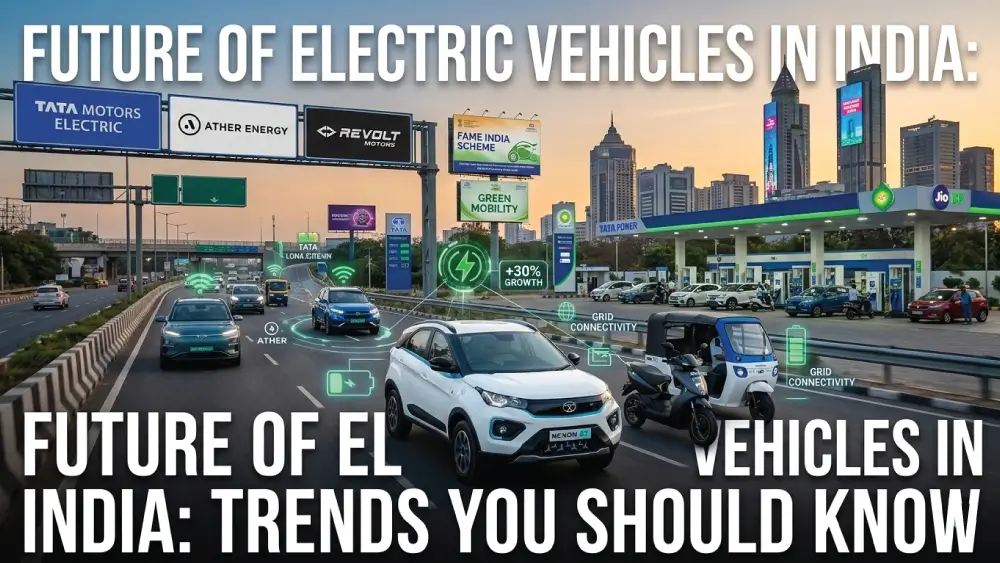
India is rapidly moving toward an electric mobility revolution. With rising fuel prices, increasing environmental awareness, and strong government backing, electric vehicles (EVs) are no longer just a futuristic concept-they are becoming a mainstream reality. According to recent industry insights, India’s EV market has grown at an impressive 63% CAGR over the last six years, highlighting how quickly the transition is happening.
In this detailed guide by Auto Sphere 24, we explore the future of electric vehicles in India, key trends shaping the industry, and what you should expect in the coming years.
EV Growth in India
Electric vehicles are transforming how India moves. From e-rickshaws to premium electric SUVs, EVs are now present across multiple segments. India aims to achieve 30% EV penetration in passenger vehicles by 2030, supported by policy frameworks and infrastructure investments.
This shift is driven by three major factors:
- Rising petrol and diesel prices
- Climate change concerns
- Technological advancements
Current EV Market Scenario in India
India’s electric vehicle (EV) market is currently in a high-growth phase, transitioning from early adoption to mainstream acceptance. While EV penetration in passenger vehicles is still developing, the overall ecosystem-spanning manufacturing, infrastructure, and consumer awareness-is expanding rapidly.
One of the most important aspects of the current EV landscape is the dominance of electric two-wheelers and three-wheelers. These segments account for a significant portion of total EV sales due to their affordability, lower running costs, and suitability for daily urban commuting. E-rickshaws, in particular, have become a backbone of last-mile connectivity in many Indian cities.
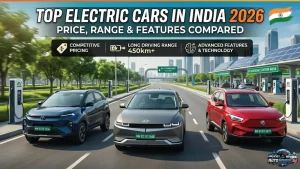
In the passenger vehicle segment, adoption is steadily rising as more automakers introduce feature-rich and longer-range electric cars. Improved battery efficiency and increasing driving ranges-often exceeding 300–500 km per charge-are helping reduce range anxiety among buyers.
Another key development is the growing investment in EV infrastructure. Charging networks are expanding across highways, metro cities, and even smaller towns. Public-private partnerships are playing a crucial role in building accessible charging stations, making EV ownership more convenient than ever before.
Additionally, the market is witnessing strong participation from both startups and established automobile manufacturers. This has created a competitive environment where companies are focusing on innovation, pricing strategies, and enhanced user experience. As a result, consumers now have a wider variety of EV options across different price segments.
From a policy perspective, government initiatives continue to push adoption through subsidies, tax benefits, and localization efforts. These measures are encouraging domestic production and reducing dependency on imports, which is essential for long-term growth.
Overall, the current EV market scenario in India reflects a transformational shift. While challenges like upfront costs and infrastructure gaps still exist, the momentum is clearly in favor of electric mobility. With continuous advancements and increasing demand, EVs are steadily becoming a practical and future-ready choice for Indian consumers.
Key Trends Shaping the Future of EVs in India
1. Strong Government Policies & Incentives
Government initiatives like:
- FAME (Faster Adoption and Manufacturing of EVs)
- State-level subsidies
- Tax benefits
These policies are reducing the cost of ownership and encouraging adoption.
Additionally, schemes like PLI (Production Linked Incentive) are boosting local manufacturing and reducing dependency on imports.
2. Rapid Expansion of Charging Infrastructure
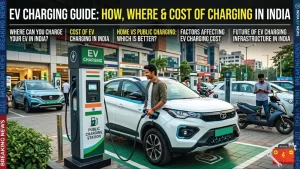
One of the biggest concerns for EV buyers has been charging availability. However, the situation is improving rapidly.
- Charging stations increased from 5,000+ in 2022 to over 26,000 by 2025
- India may need 1.32 million charging stations by 2030
This expansion will significantly reduce range anxiety and make EVs more practical.
3. Affordable EV Models Entering the Market
Earlier, EVs were expensive compared to petrol cars. But now:
- More budget-friendly EVs are launching
- Price gap between EVs and ICE cars is shrinking
- Financing options are improving
This trend will make EVs accessible to middle-class buyers.
4. Advancements in Battery Technology
Battery technology is evolving quickly, leading to:
- Longer driving ranges
- Faster charging times
- Lower costs
Future innovations like solid-state batteries could further revolutionize EV performance.
5. Dominance of Electric Two & Three Wheelers
India’s EV growth is currently led by:
- Electric scooters
- E-rickshaws
These segments have:
- Lower costs
- Easier charging needs
- High daily usage
They are driving mass adoption faster than electric cars.
6. Entry of New Players & Rising Competition
India’s EV market is becoming highly competitive with:
- Domestic players expanding portfolios
- Global brands entering India
Startups innovating rapidly
This competition is leading to:
- Better features
- Competitive pricing
- Improved quality
7. Shift Toward Sustainable Mobility
EV adoption aligns with India’s sustainability goals:
- Reduced carbon emissions
- Lower air pollution
- Cleaner urban transport
Electric mobility is becoming a key part of India’s green future.
Challenges in EV Adoption
Despite rapid growth, several challenges remain:
1. High Initial Cost
EVs still cost 20–30% more than petrol vehicles.
2. Charging Infrastructure Gaps
Charging networks are still limited in rural and Tier-2 cities.
3. Battery Dependency on Imports
India relies heavily on imported battery components.
4. Policy Uncertainty
Some subsidies and policies are temporary, creating uncertainty for buyers and manufacturers.
Future Outlook: EVs by 2030
The future of EVs in India looks promising:
- EV production could reach 1.33 million units by 2030
- EVs may account for 20–30% of total vehicle sales
- Charging infrastructure will expand massively
- Costs will continue to decline
India is expected to become one of the largest EV markets globally.
Impact on Consumers & Economy
For Consumers:
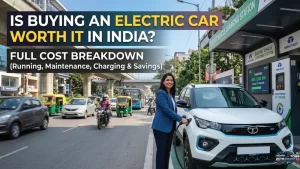
- Lower running costs
- Reduced maintenance
- Eco-friendly driving
For Economy:
- Growth in manufacturing sector
- Job creation
- Reduced oil imports
EVs will play a major role in shaping India’s economic and environmental future.
Conclusion
The future of electric vehicles in India is bright, dynamic, and full of opportunities. With strong policy support, rapid technological advancements, and increasing consumer awareness, EVs are set to dominate the Indian automotive market in the coming years.
While challenges like cost and infrastructure still exist, the pace of innovation and investment suggests that these barriers will gradually disappear.
At Auto Sphere 24, we believe that the EV revolution is not just coming-it’s already here. The next decade will redefine how India drives, fuels, and experiences mobility.
FAQs
Are electric vehicles the future in India?
Yes, EVs are expected to play a major role, with a target of up to 30% adoption by 2030.
Why are EVs gaining popularity in India?
Due to rising fuel prices, government incentives, and environmental awareness.
What is the biggest challenge for EV adoption?
Charging infrastructure and high initial costs remain the main challenges.
Which EV segment is growing fastest in India?
Electric two-wheelers and three-wheelers are leading the growth.
Will EVs become cheaper in the future?
Yes, battery costs are decreasing, making EVs more affordable over time.
Is it worth buying an EV in India now?
For city driving and long-term savings, EVs are increasingly becoming a smart choice.