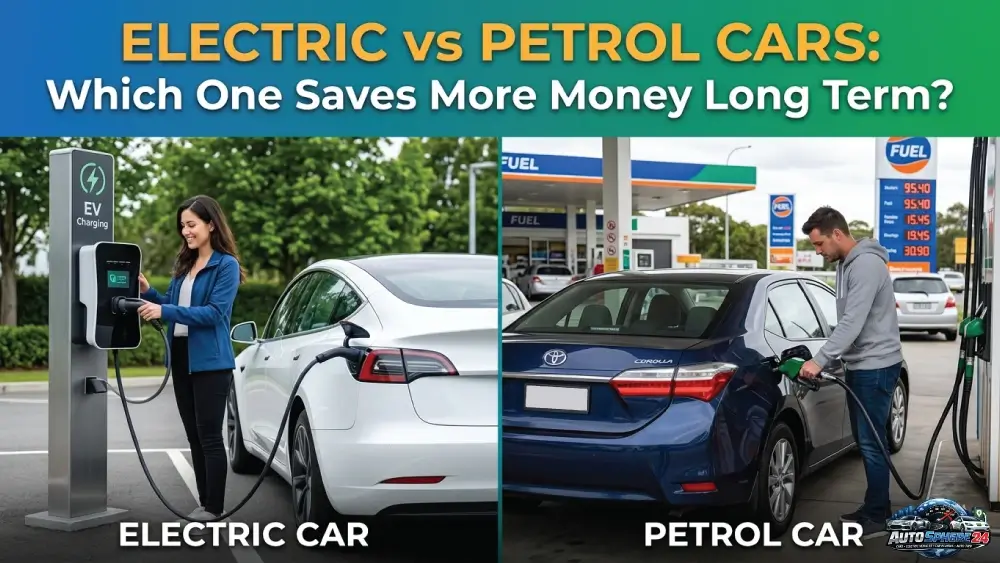
The debate between electric vehicles (EVs) and petrol cars is one of the hottest topics in India’s rapidly evolving automobile industry. With rising fuel prices, government incentives, and growing environmental awareness, buyers are increasingly asking one key question: Which option actually saves more money in the long run? In this detailed guide by Auto Sphere 24, we break down the total cost of ownership (TCO), running expenses, maintenance, and hidden costs to help you make a smart financial decision.
Electric vehicles are no longer a futuristic concept-they are rapidly becoming mainstream in India. However, while EVs promise lower running costs, petrol cars still dominate due to lower upfront prices and convenience. So, the real question is not just affordability-but long-term savings.
Total Cost of Ownership (TCO)
When comparing EVs and petrol cars, you must look beyond the showroom price. The Total Cost of Ownership (TCO) includes:
- Purchase cost
- Fuel/charging cost
- Maintenance
- Insurance
- Depreciation
- Repairs or replacements
Only by analyzing all these factors can you determine which vehicle is truly cost-effective.
Purchase Price: EV vs Petrol
One of the biggest differences is the initial cost.
- EVs are typically ₹2–5 lakh more expensive than petrol cars in India
- This extra cost is often called the “green premium”
Example:
- Petrol SUV: approx. ₹10–11 lakh
- Electric version: approx. ₹15 lakh
While subsidies and tax benefits help reduce this gap, EVs still require a higher initial investment.
Running Cost Comparison (Per Km)
This is where EVs dominate.
Petrol Cars:
- ₹6.5 to ₹10 per km depending on fuel price and mileage
Electric Cars:
- ₹1 to ₹2 per km (home charging)
Result: EVs are up to 70–80% cheaper to run.
Monthly Example (1,000 km):
- Petrol: ₹7,000
- EV: ₹1,800
- Savings: ₹60,000+ per year
Maintenance & Servicing Costs
EVs have fewer moving parts, which significantly reduces maintenance.
Petrol Cars:
- Engine oil changes
- Filters, clutch, gearbox servicing
- Annual cost: ₹10,000–₹15,000
Electric Cars:
- No engine oil
- Minimal servicing
- Annual cost: ₹4,000–₹6,000
Savings: Around ₹6,000–₹9,000 per year
Insurance & Additional Costs
- EV insurance is slightly higher due to expensive batteries
- Premium difference: approx. ₹5,000/year
However, EVs often get discounted third-party insurance, balancing the cost.
Battery Replacement vs Engine Costs
This is the biggest concern for EV buyers.
EV Battery:
- Lifespan: 8–10 years
- Replacement cost: ₹4–₹8 lakh
Petrol Engine:
- Long lifespan but higher maintenance over time
Important: Most EV batteries come with 8-year warranties, reducing risk.
5-Year Cost Comparison (Real Example)
Let’s compare a petrol car and its EV version:
| Cost Category | Petrol Car | Electric Car |
|---|---|---|
| Purchase Price | ₹10.5 lakh | ₹15.2 lakh |
| Fuel/Electricity | ₹8.3 lakh | ₹2.0 lakh |
| Maintenance | ₹0.85 lakh | ₹0.43 lakh |
| Insurance | ₹0.66 lakh | ₹1.03 lakh |
| Total Cost | ₹14.04 lakh | ₹10.30 lakh |
EV saves approx. ₹3.7 lakh in 5 years
Break-Even Point
Because EVs cost more initially, savings take time.
- Average break-even: 5–8 years or approx. 1.4 lakh km
- High usage drivers: 3–4 years
- Low usage drivers: 8–10 years
The more you drive, the more you save with EVs.
Factors That Affect Your Savings
- Driving Distance: High mileage makes EVs more cost-effective, while low mileage makes petrol cars a better option.
- Charging Type: Home charging is the cheapest, whereas fast charging results in higher costs.
- Fuel Prices: Rising petrol prices increase the overall cost advantage of EVs.
- Resale Value: Petrol cars currently offer better resale value, while EV resale is improving but still uncertain.
EV vs Petrol: Pros & Cons
Electric Cars (EVs)
- Low running cost
- Low maintenance
- Eco-friendly
- Higher upfront cost
- Charging infrastructure still growing
Petrol Cars
- Lower purchase price
- Easy refueling
- Better resale value
- High fuel cost
- Higher maintenance
Final Verdict: Which Saves More Money?
Choose EV if:
- You drive 20–30+ km daily
- You can charge at home
- You plan long-term ownership
Choose Petrol if:
- Your usage is low (Less Than 1,000 km/month)
- You need flexibility for long trips
- You want a lower upfront investment
Conclusion
In most real-world scenarios, electric cars save significantly more money over time, especially for daily commuters. However, petrol cars still make sense for occasional users. As the EV ecosystem evolves, falling battery costs and expanding infrastructure will make EVs even more cost-effective in the future. At Auto Sphere 24, we believe the shift toward electric mobility is not just environmentally smart-but financially wise too.
FAQs
Are electric cars cheaper than petrol cars in India?
Yes, EVs are cheaper in the long run due to lower running and maintenance costs, despite higher upfront prices.
What is the running cost difference between EV and petrol?
EVs cost around ₹1–₹2/km, while petrol cars cost ₹6–₹10/km
How long does it take to recover EV cost?
Typically 5–8 years, depending on usage and driving distance.
Is battery replacement expensive?
Yes, it can cost ₹4–₹8 lakh, but most EVs come with 8-year warranties.
Which car is better for long-distance travel?
Petrol cars are currently more convenient due to faster refueling and wider availability.
Will EV prices become cheaper in the future?
Yes, EV prices are expected to reach parity with petrol cars as technology improves and adoption increases.